Derby and District Astronomical Society
Solar Eclipse
Wednesday 12th August 2026
| On the evening of Wednesday, 12th August 2026 a much anticipated partial solar eclipse was visible across the UK. While some DDAS members viewed, photographed and videoed the eclipse from home, a number of others gathered at our Flamsteed Observatory to witness and record the event. Meanwhile some of our members were lucky enough to witness the eclipse from Spain, where it was total. From the Derby area first contact occurred at about 18:15 BST, with maximum eclipse about an hour later, and the eclipse ending around 20:05. Here is a selection of photos and videos from the event taken by our members. |
|
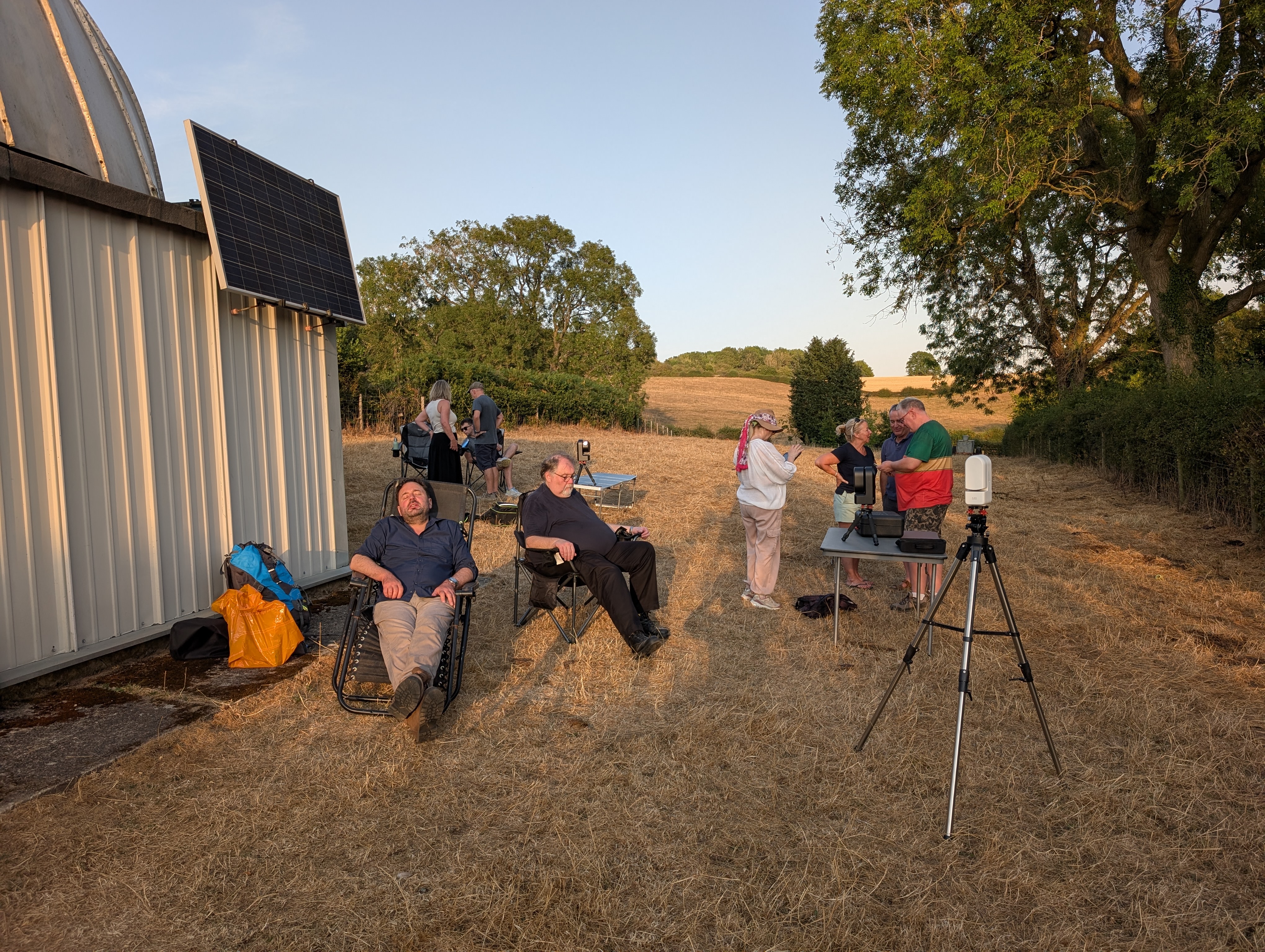
Long evening shadows fall across the parched grass at the Flamsteed Observatory as members gather for the eclipse. Credit: Mike Lancaster.
|
|
|
|
Chris Booth took the attached sequence of pictures on his Seestar S50. This was created by stacking 15 second videos and then stitching them together on an iPad with slight adjustments for background and brightness. Credit: Chris Booth.
|
 |
|
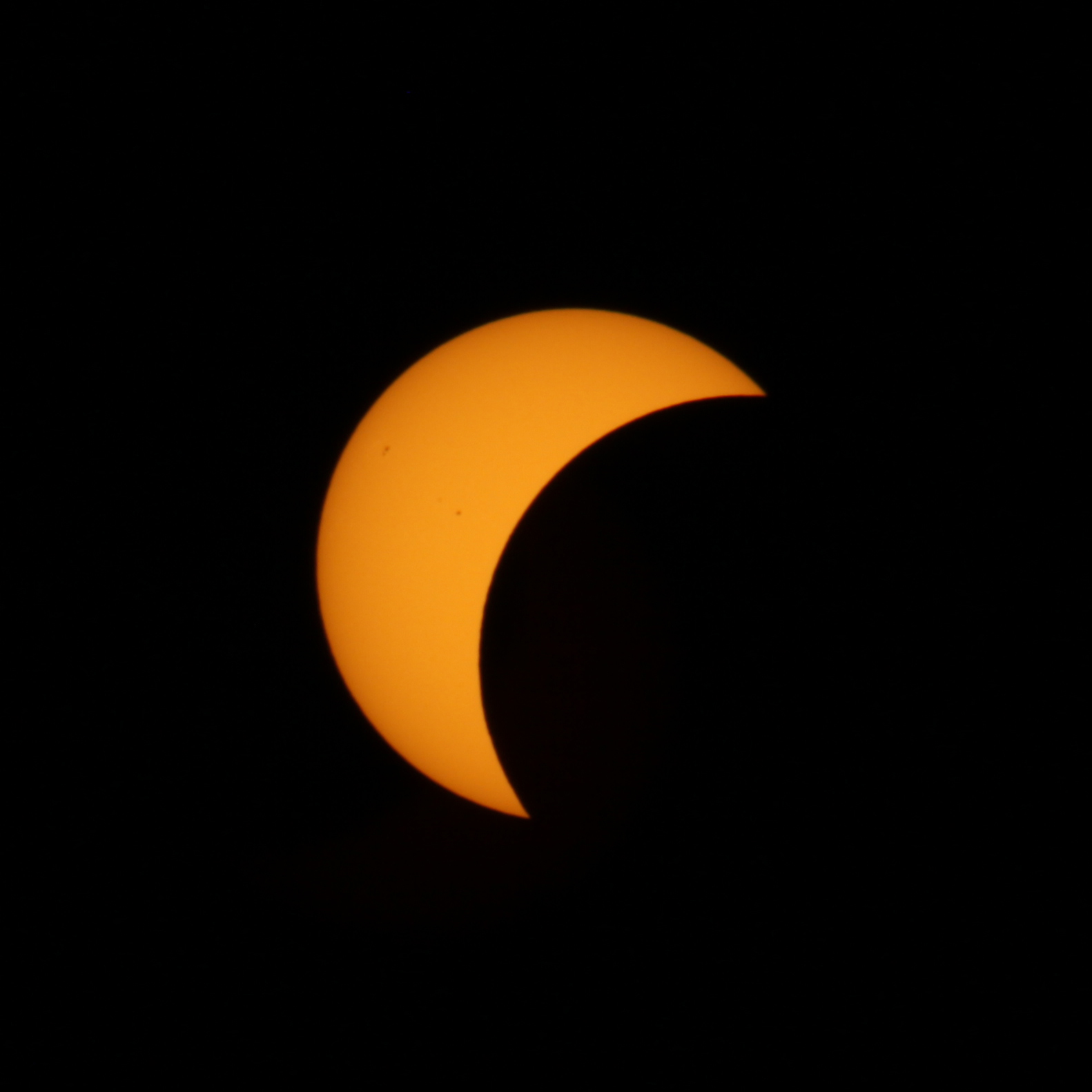
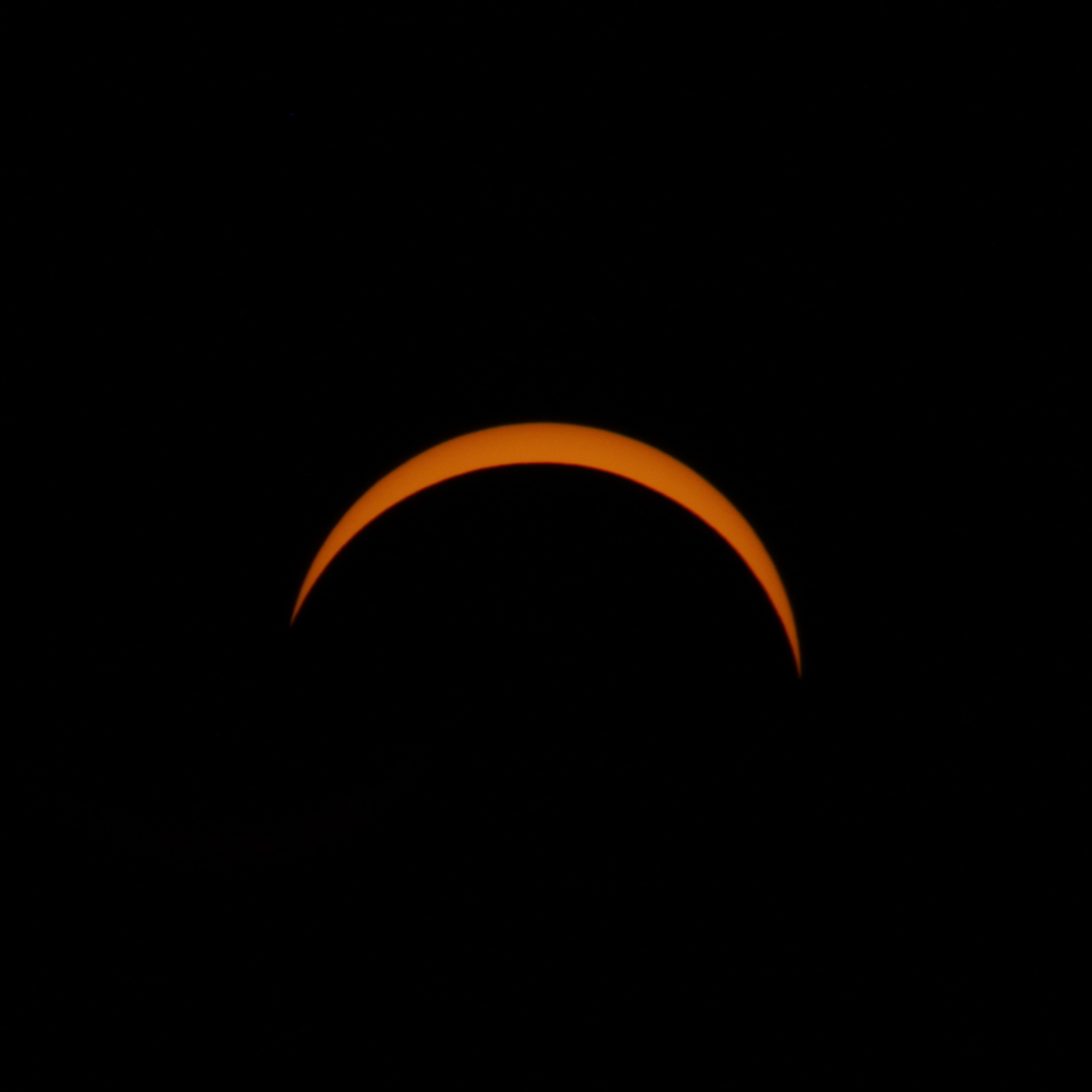
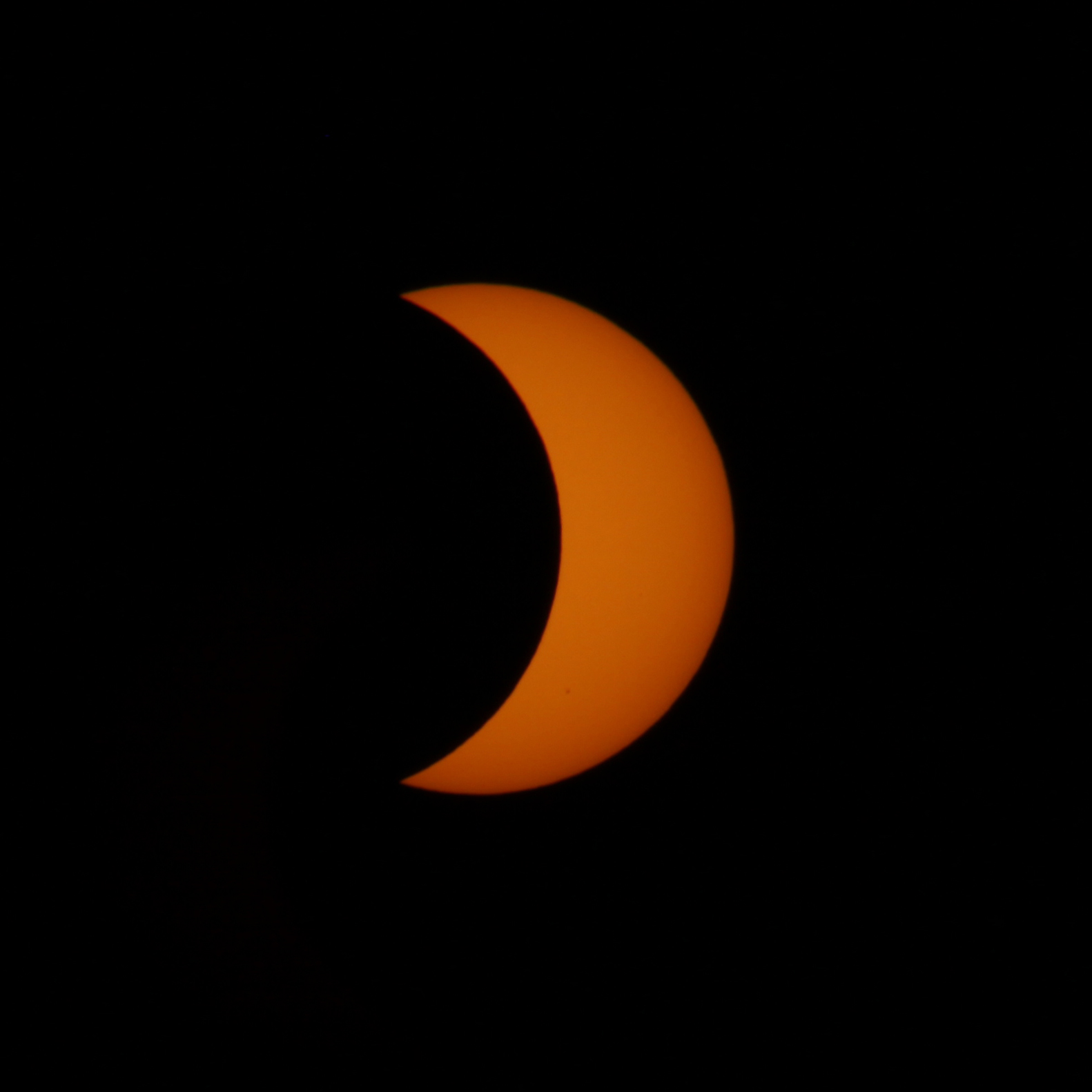
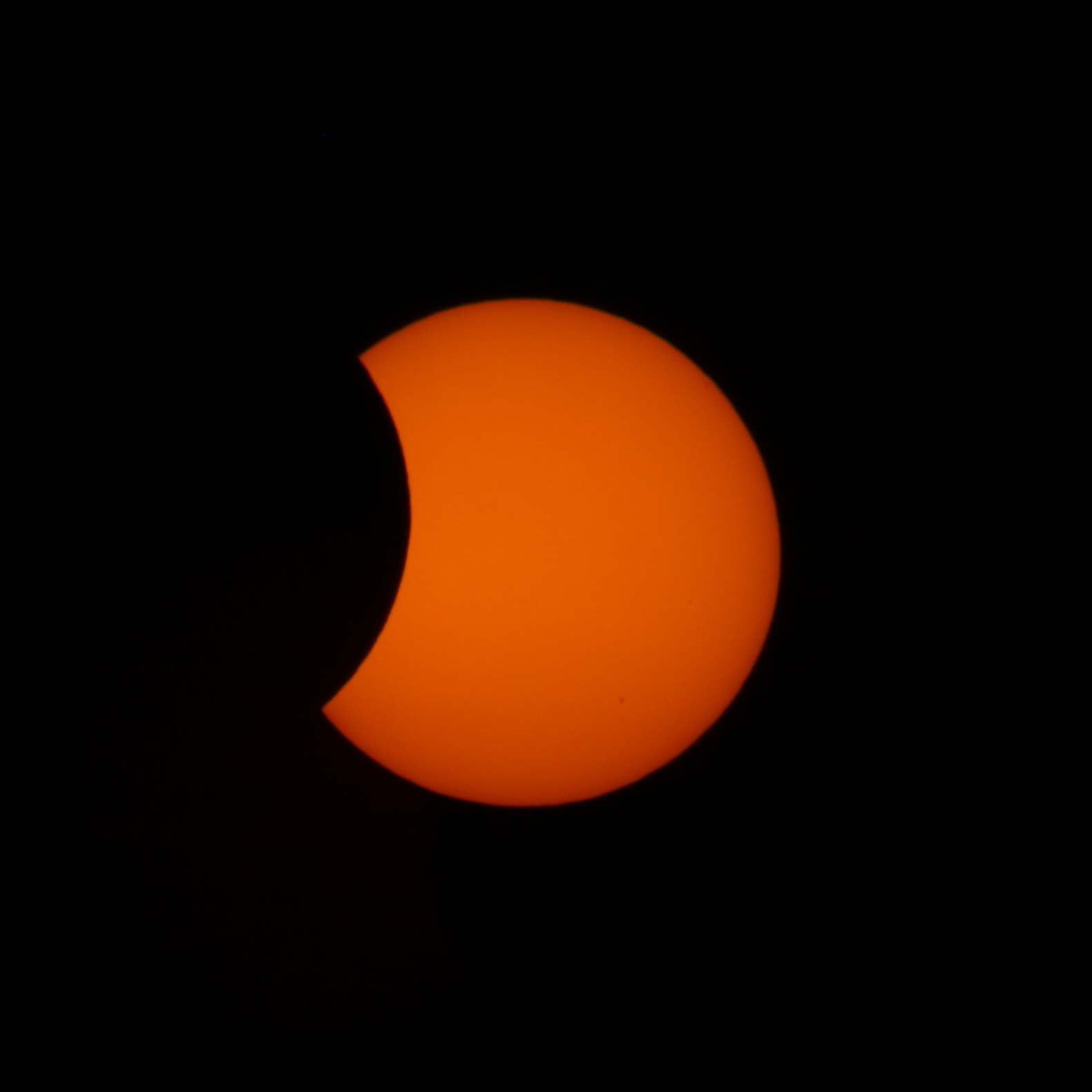
Mike Lancaster photographed the partial eclipse from the Flamsteed Observatory using a Canon EOS 50D camera, 400mm Tamron lens, and a Helios Glass Seymour Solar filter. All frames were shot at f/16 and ISO 100, and most at 1/25th second, with 1/10th second for the later stages of the eclipse. Here is a selection of those images, all cropped from the originals. Credit: Mike Lancaster.
|
 |
 |
 |
 |
 |
|
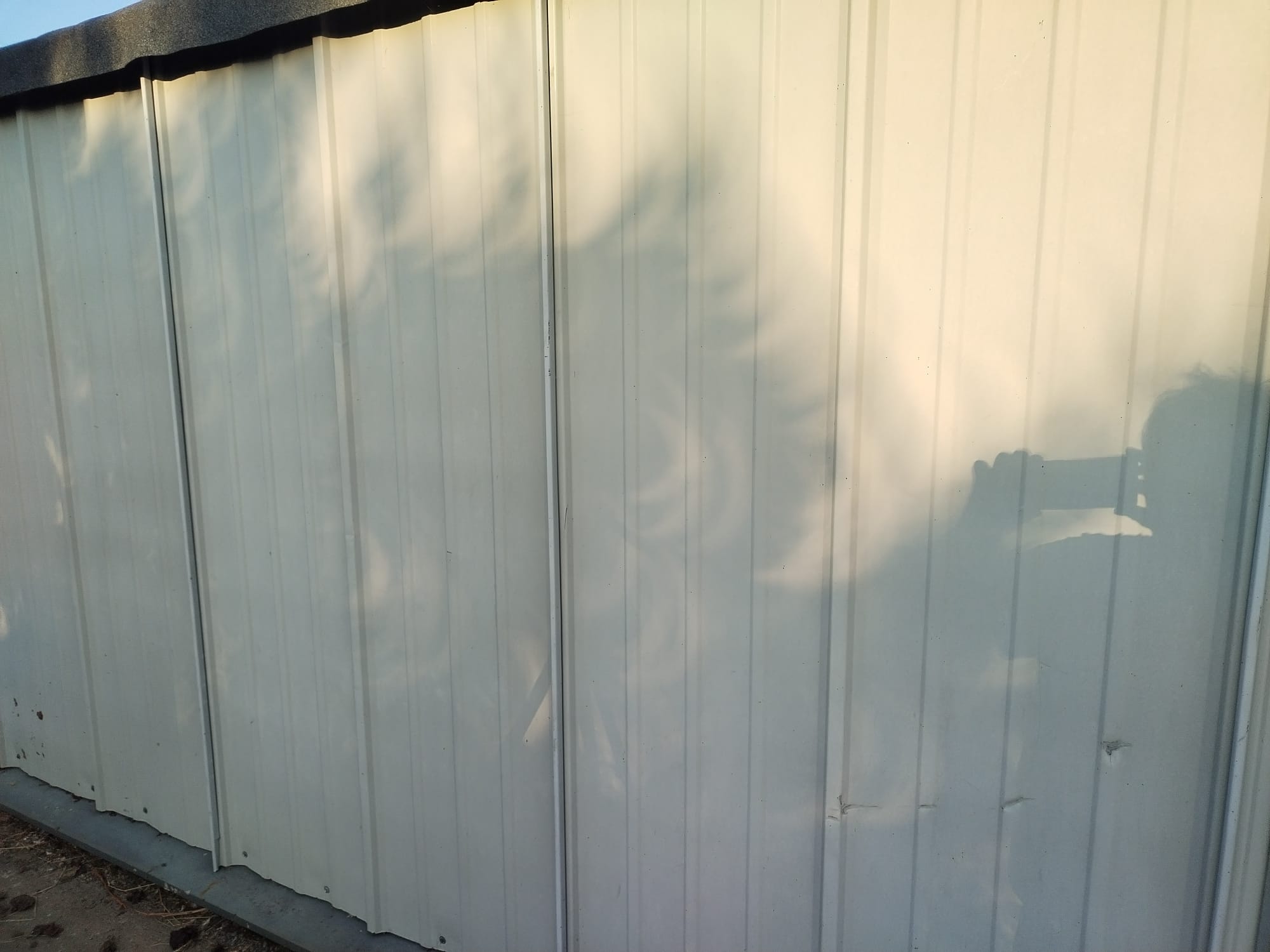
Sunlight passing through the leaves of nearby trees casts multiple crescent shapes on the side of the Flamsteed Observatory during the partial eclipse. Credit: Anthony Southwell.
|
 |
|
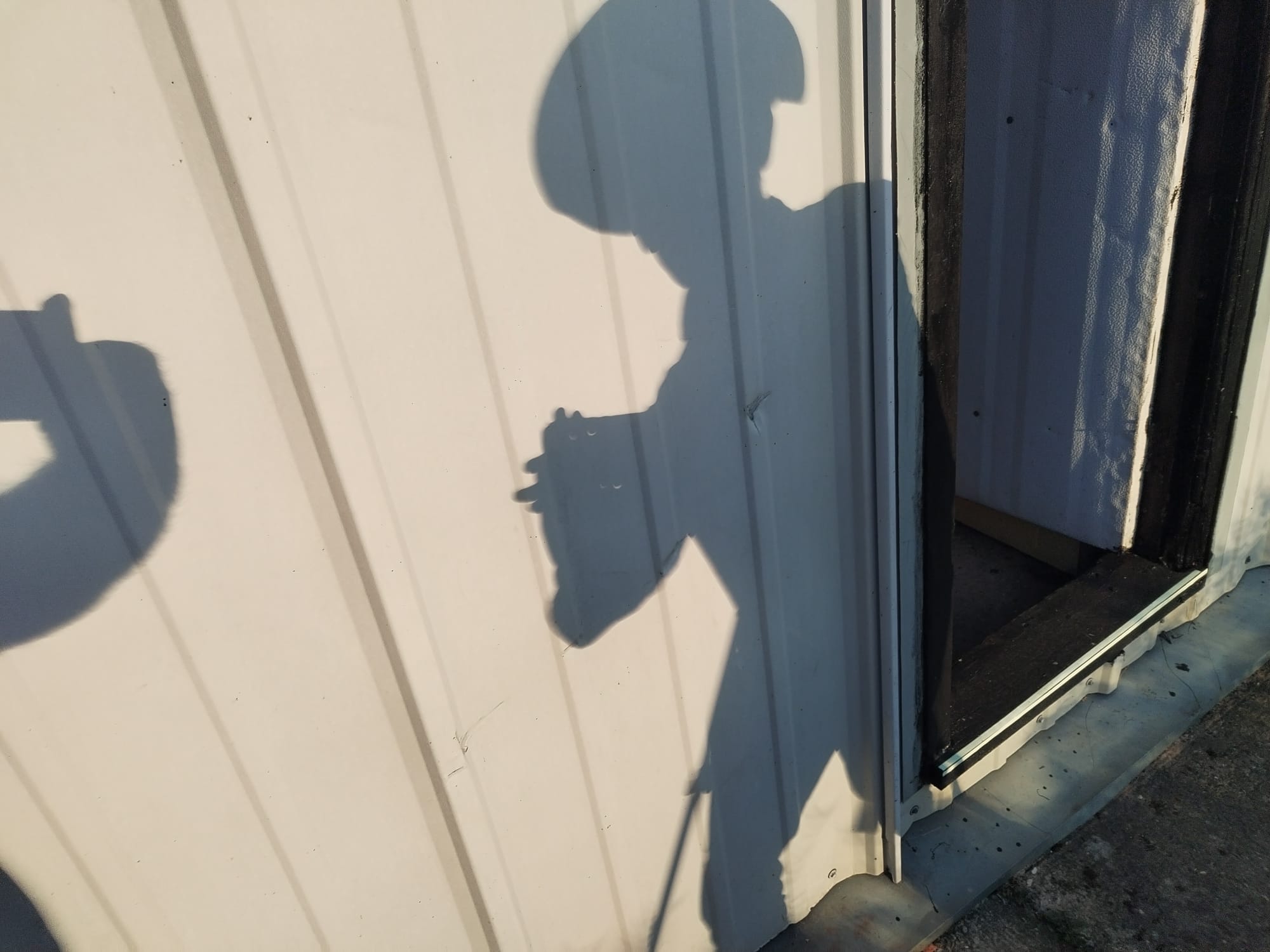
By crossing the hands with the fingers almost closed one can create an impromptu pinhole camera, and view the resulting crescent suns, as demonstrated here by Mike Lancaster. Picture Credit: Anthony Southwell.
|
 |
|
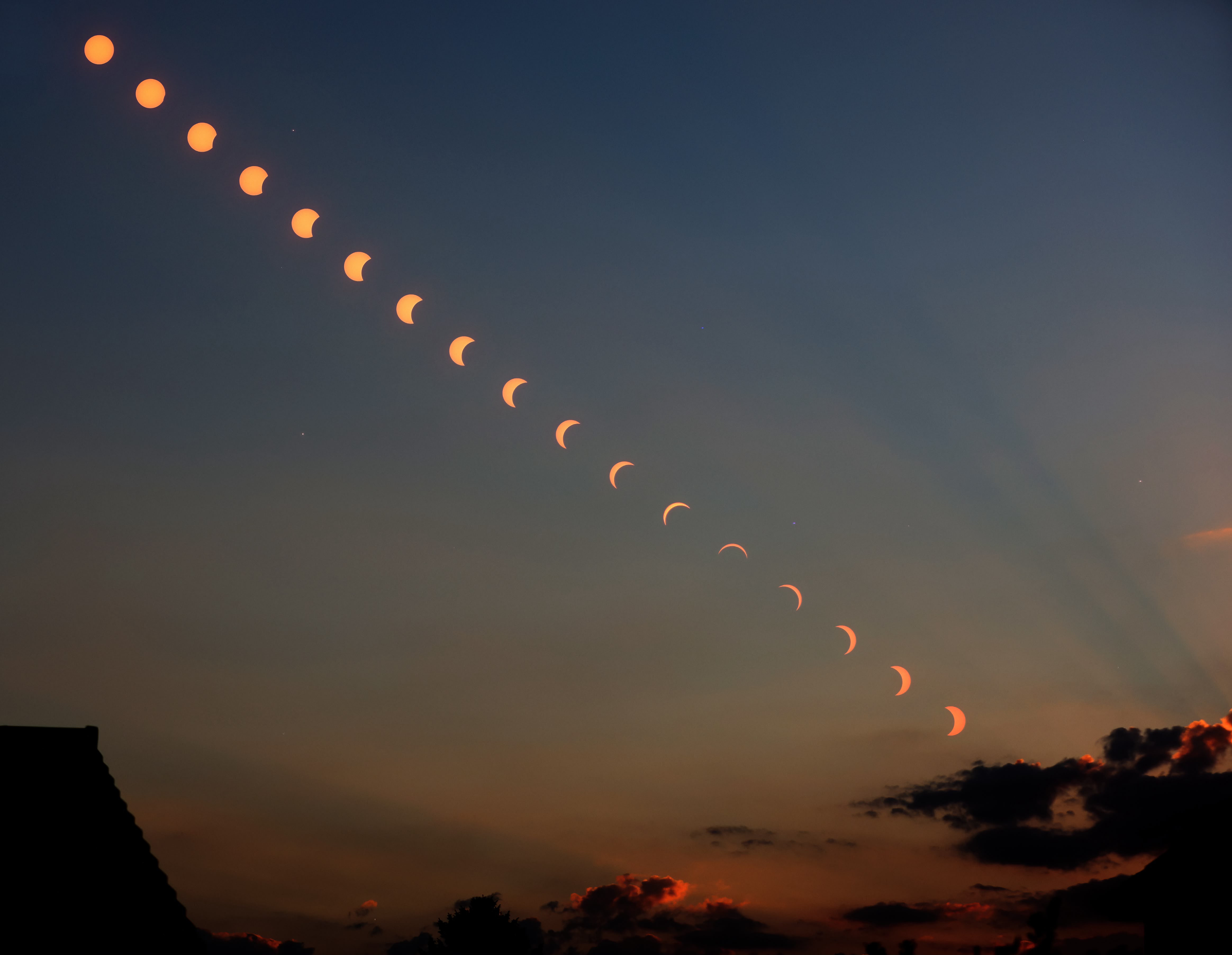
Chris Callaway created the following montage of the UK partial eclipse. The 17 individual images were shot using a Canon R6 Mk2 camera, Canon 70-200mm f/2.8 lens set at 70mm, a Seymour solar filter and Manfrotto tripod. The success of the image was down to the planning in the days and hours prior to the eclipse. Chris chose a 5 minute interval between frames and worked out what field of view was required to cover the eclipse from beginning to end. The exposure setting used was f4.5, ISO 800 and 1/400th sec shutter speed, with 1/80th sec for the final 4 sun images in the montage. Chris also took an image when the sun was out of the field of view with the Seymour filter removed to use as a background. For that background image he used a 1/2000th second exposure. The images were combined and processed in Photoshop to produce the montage. Credit: Chris Callaway.
|
 |
|
Chris Callaway also produced this video of the partial solar eclipse. One image was shot every minute giving a total of 87 frames. A Coronado 90 solar scope was used with an Altair 26C camera on an AVX mount. The data was gathered using SharpCap, then aligned firstly using PIPP, secondly with Photoshop, and then a manual adjustment of some of the frames. The exposure time varied during the eclipse and curves were adjusted during processing. Credit: Chris Callaway.
|
|
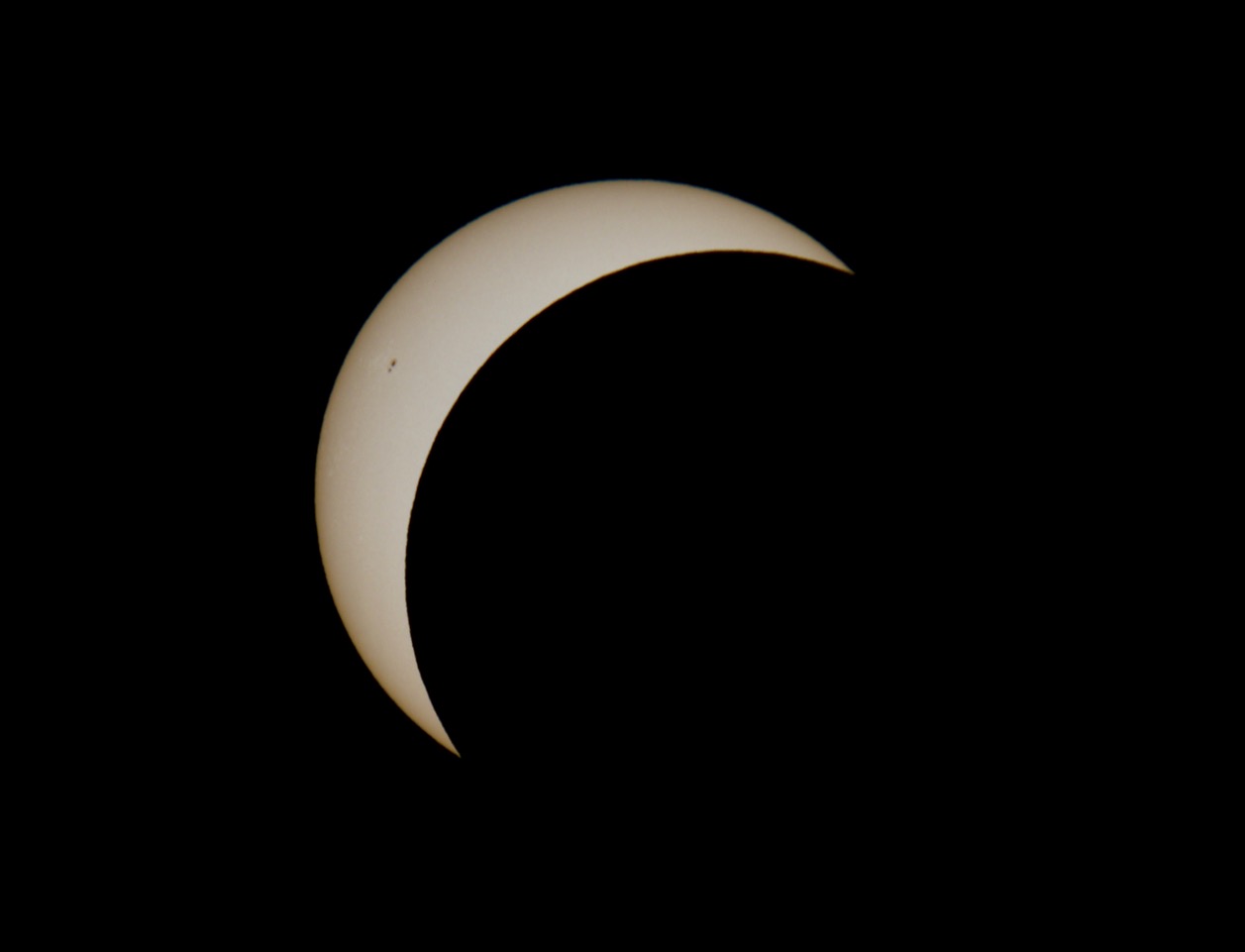
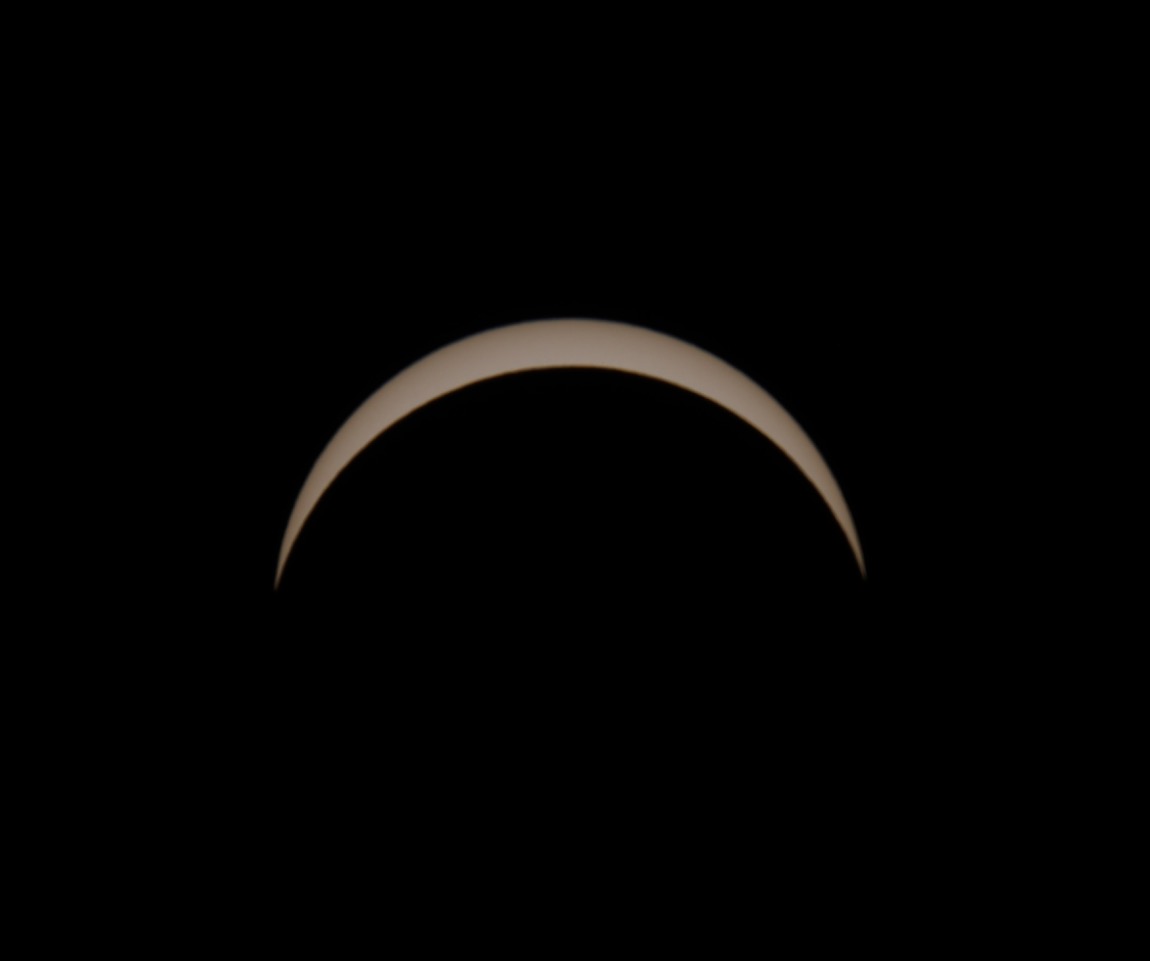
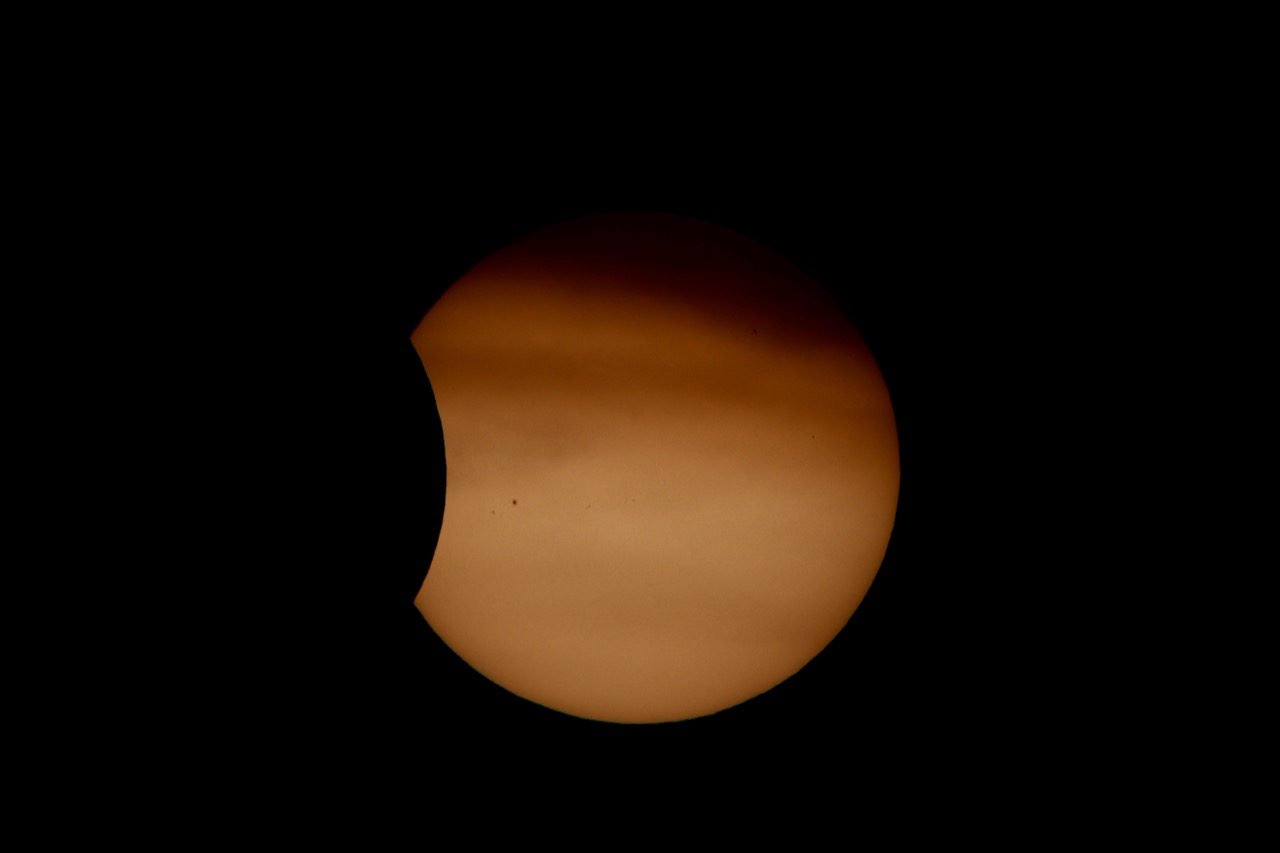
Rob Seymour took the following three images of the eclipse. All were taken afocally using a 100mm / 800mm APM refractor with 2x Televue Powermate and a Canon R6ii camera. Credit: Rob Seymour.
|
 |
 |
 |
|
Russ Pollard took this 2 min 35 sec time lapse video of the eclipse using a Seestar S50. Credit: Russ Pollard.
|
|
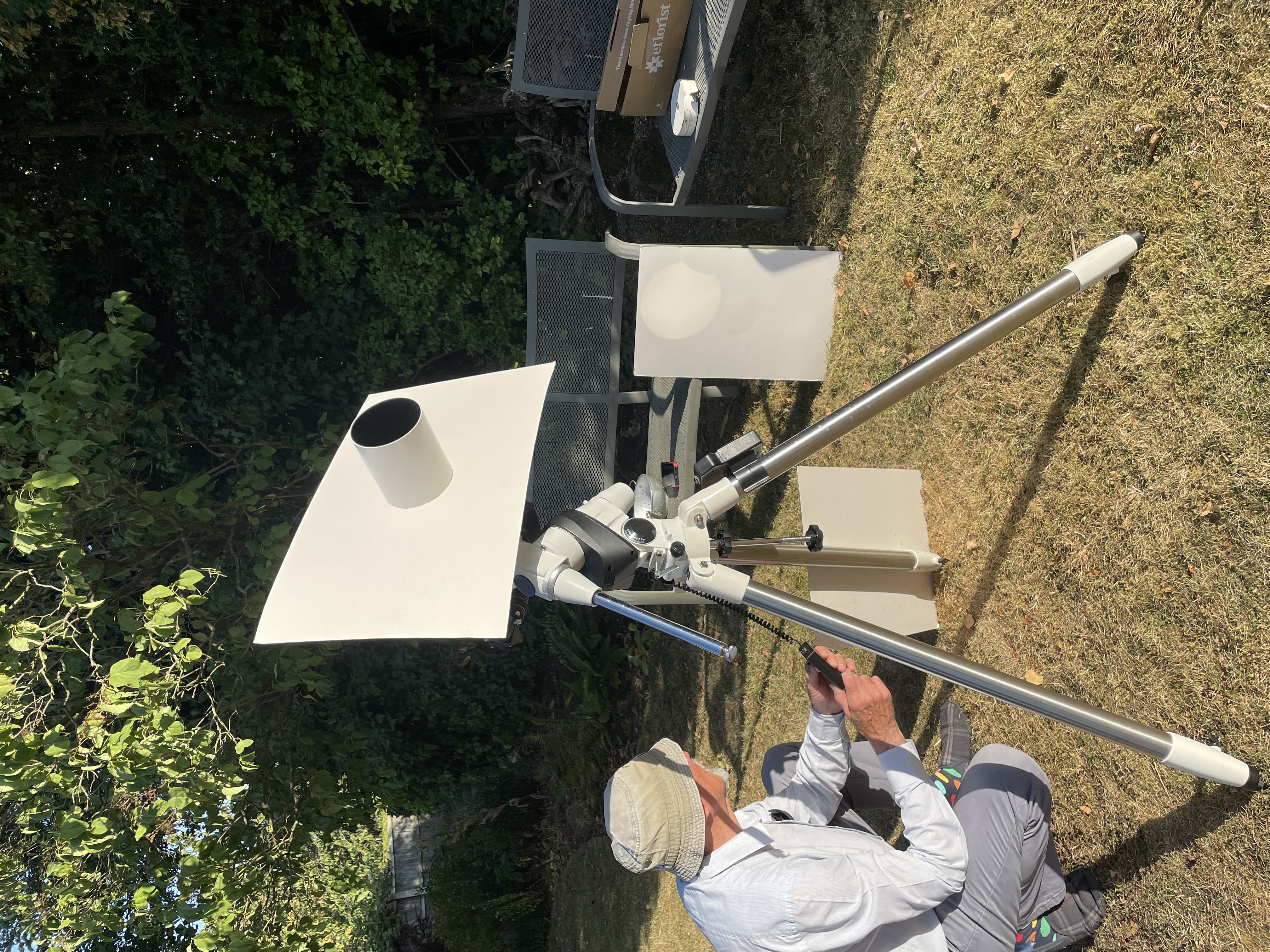
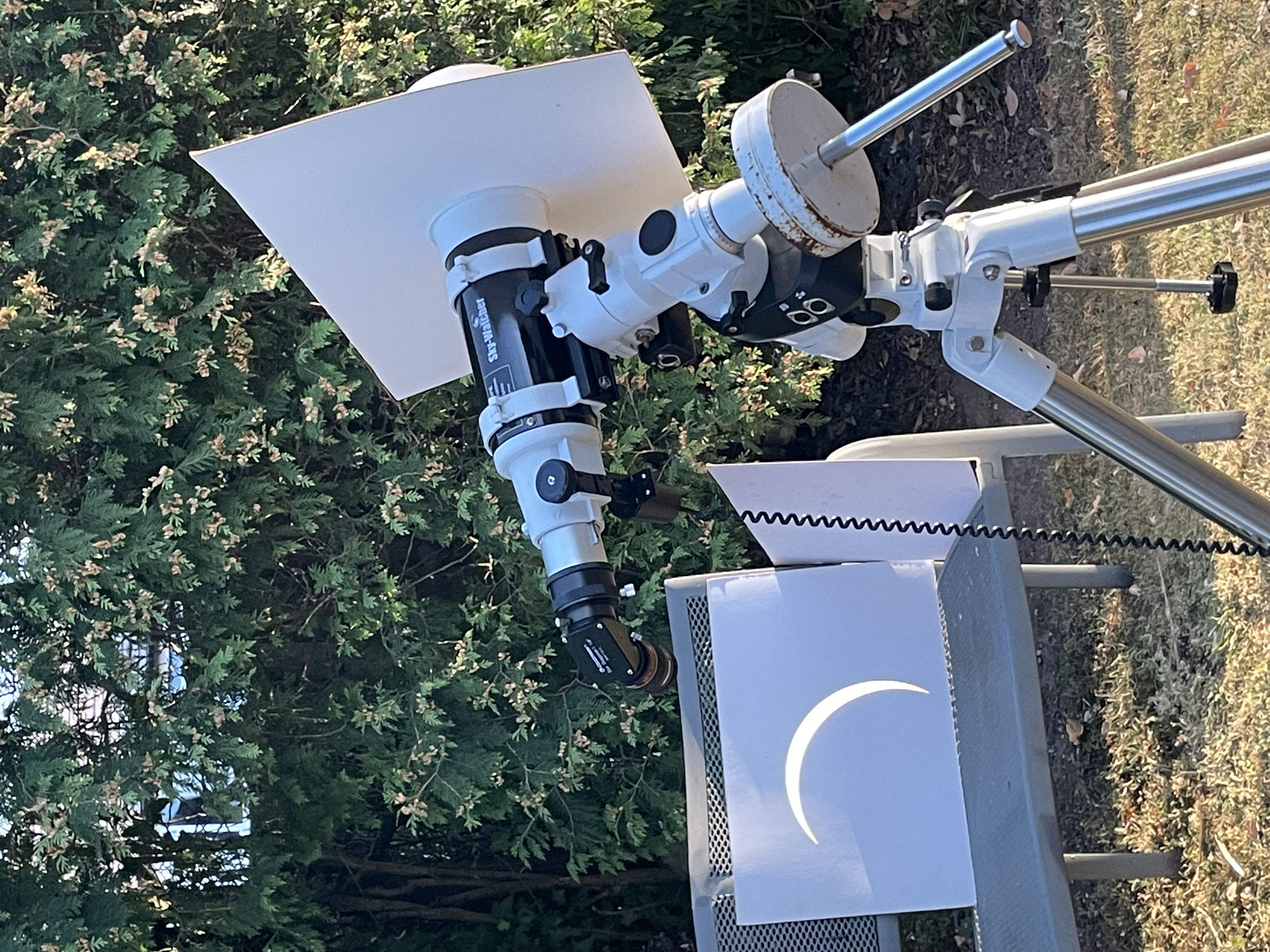
Peter Branson set up his SkyWatcher Star Traveller telescope with a 90 degree prism attachment to project the image of the sun onto a piece of white card propped up on a seat in a shady part of the garden. Credit: Peter Branson.
|
 |
 |
|
John Hill captured this video of the partial solar eclipse using a StarTravel 120 refractor (with an Orion glass solar filter) and ZWO 294MC camera. The video is comprised of 79 frames at 1 minute intervals, at gain 50 and 100 ms exposures. The first frame was taken at 18h 19m 04s, the last frame at 19h 39m 29s. The frames were joined together using PIPP and finished in Windows Movie Maker. Credit: John Hill.
|
|
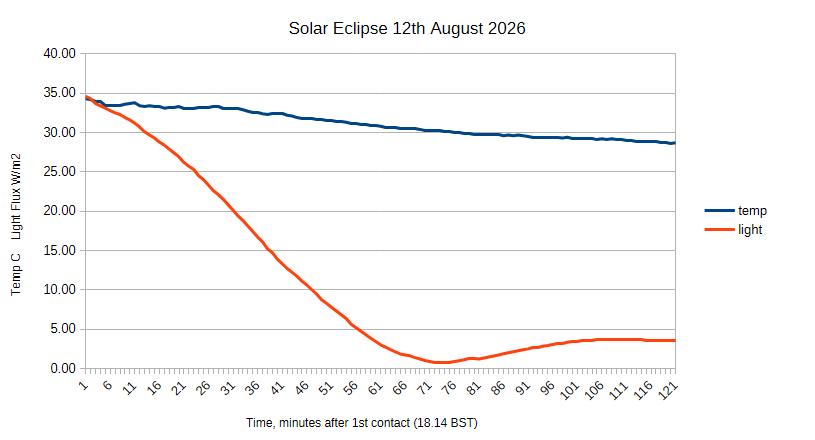
John Hill also produced this chart of the temperature and light flux during the eclipse using his home weather station. He did a similar graph for the March 2015 prartial eclipse (88%), seeing a 2-3°C temperature drop on that occasion. He presumes that hr didn't see much of a drop for the August 2026 eclipse because it was so hot the weather station didn't have time to cool down. Credit: John Hill.
|
 |
|
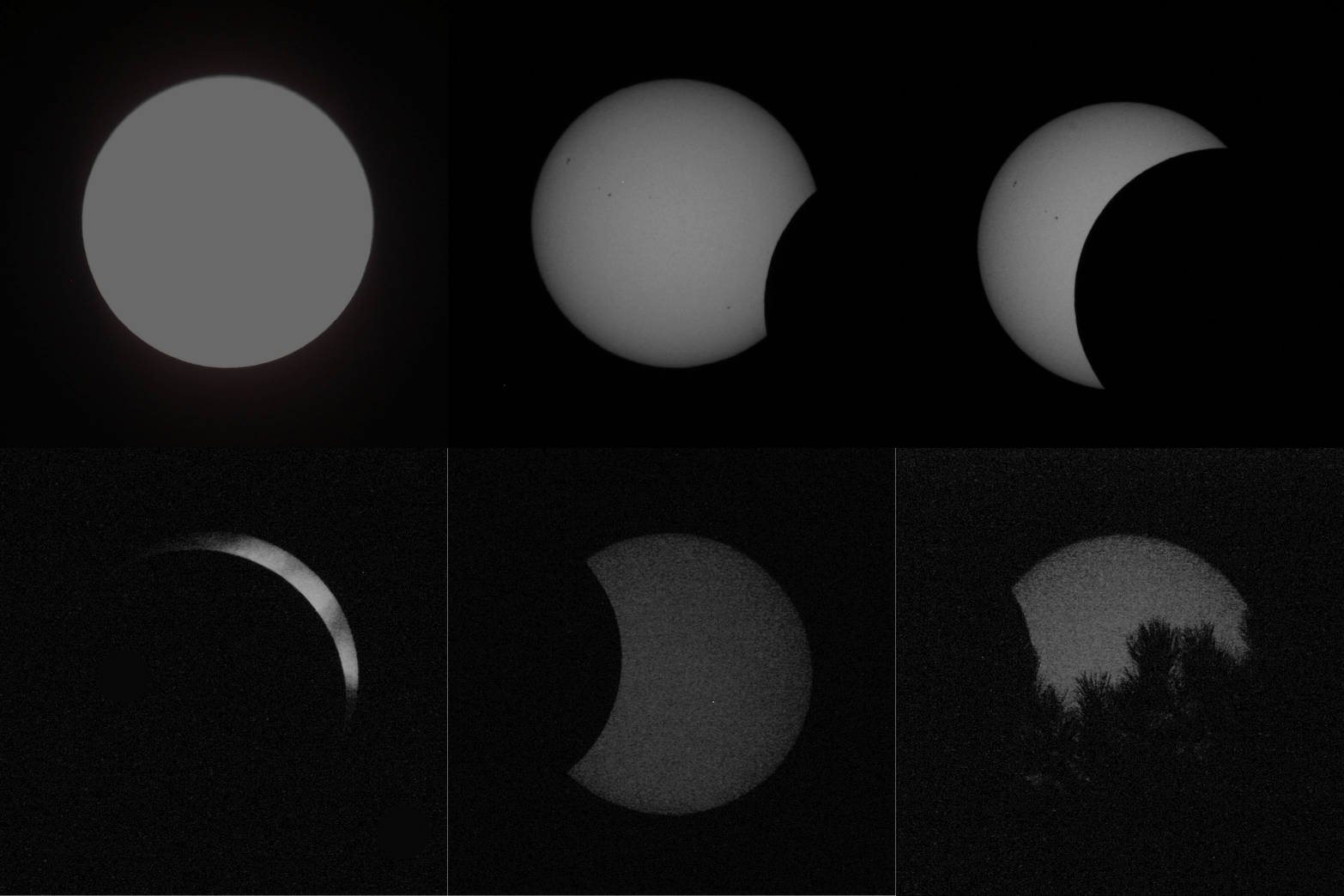
Pete Hill produced this animated GIF from images of the eclipse he captured using a tripod mounted Canon 450D camera with a Sigma 150-500 zoom lens at 500mm, ISO100 and 1/1600 s. A Kendrick Baader film filter was fitted over the lens hood and a cable shutter release was also used. Credit: Pete Hill.
|
 |
|
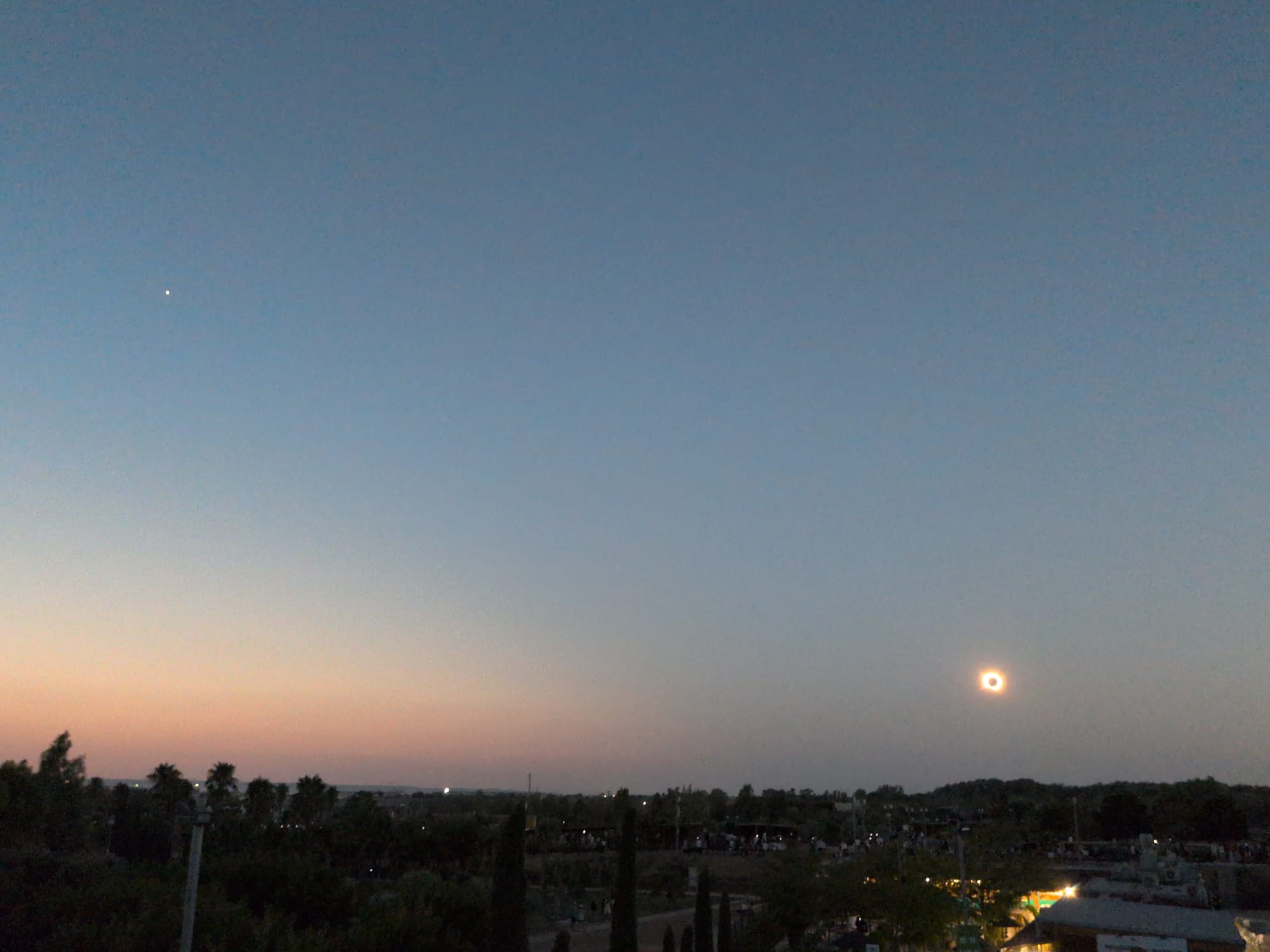
Jim Sarsgard captured these photos of totality from Zaragoza in Spain. Venus is visible at upper left in the lower photo. Jim used a Google Pixel 10A phone with the Solar Snap app. Credit: Jim Sarsgard.
|
 |
 |
|
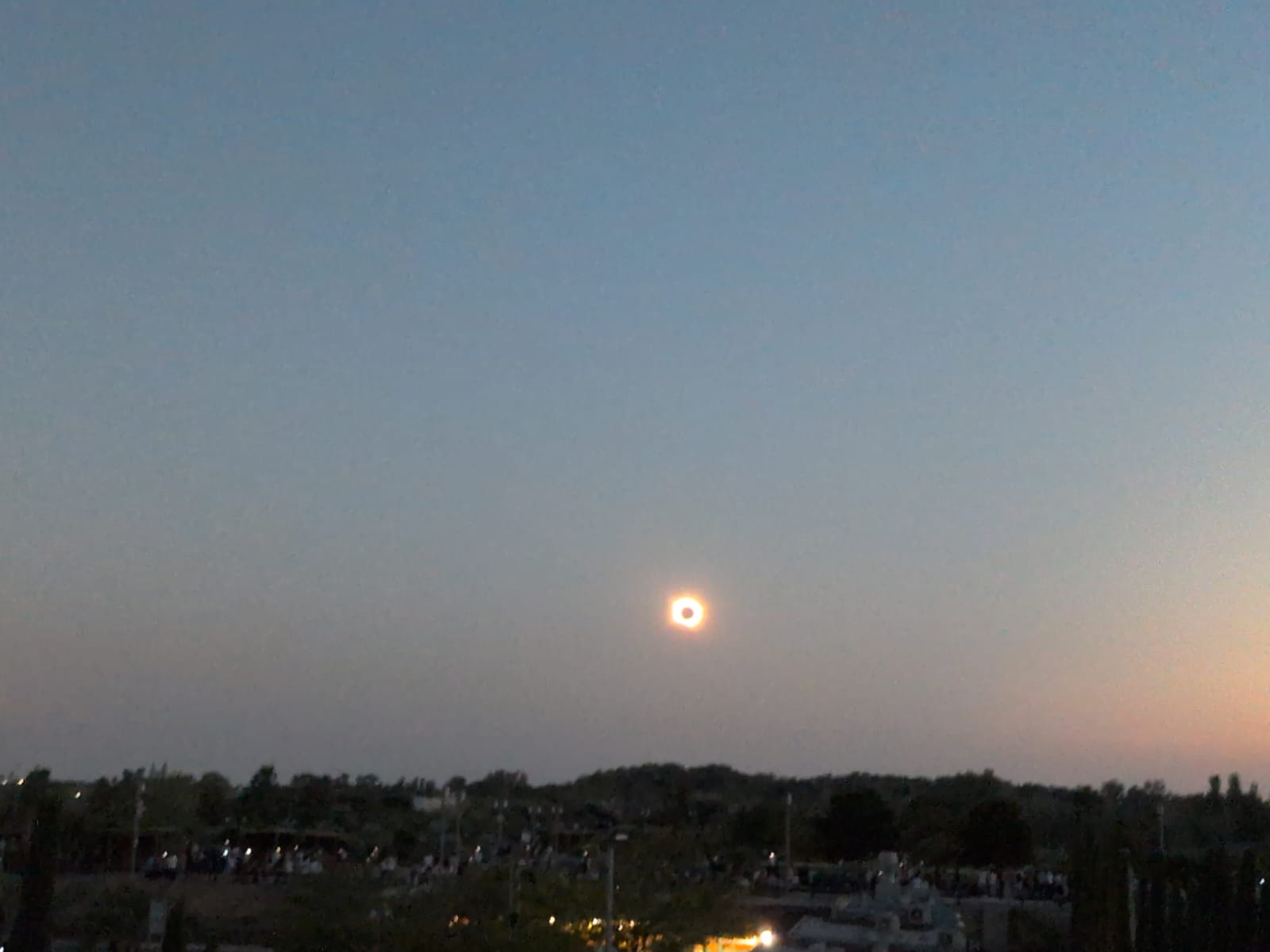
Graham Ensor captured this video of the total solar eclipse from the top of the mountain of La Camperona, near Sabero, on the southern edge of the Cantabrian Mountains in Spain. He used an iPhone 13. Credit: Graham Ensor.
|
[Top]